Understanding WinGo Analyst Tools and Their Accuracy Claims
Understand how WinGo analyst tools use past game results, what frequency and accuracy numbers actually mean, and how to check claims about automated number predictions on Jai Club.
In this article
- What Is a WinGo Analyst Tool?
- WinGo Analyst Me Number Analysis Kaise Hota Hai?
- What a WinGo Analyst Dashboard Can Show
- How Does WinGo Analyst Accuracy Work?
- Exact Number vs Colour Prediction Accuracy
- WinGo Analyst Ka 90% Accuracy Claim Sahi Hai?
- What Is the Difference Between Analysis and Prediction?
- Does More Historical Data Improve WinGo Predictions?
- How to Check a WinGo Analyst App
- What About AI-Based WinGo Analysts?
- Data Quality Matters More Than Dashboard Design
- Can WinGo Analyst Tools Predict Big or Small?
- Common Warning Signs
- Frequently Asked Questions
- What is a Jai Club WinGo Analyst?
- WinGo Analyst Me Frequency Kya Hai?
- Is WinGo Analyst the same as WinGo prediction AI?
- Can a WinGo Analyst guarantee the next number?
- Is 90% WinGo prediction accuracy believable?
- Does a professional dashboard prove the tool is official?
- Can past results reveal future numbers?
- Conclusion
A Jai Club WinGo analyst is generally described as a tool that examines previous WinGo results and presents information through charts, number counts or prediction-style dashboards. Some tools claim to identify the next digit or improve prediction accuracy. However, analysing past numbers and reliably forecasting future results are two different tasks.
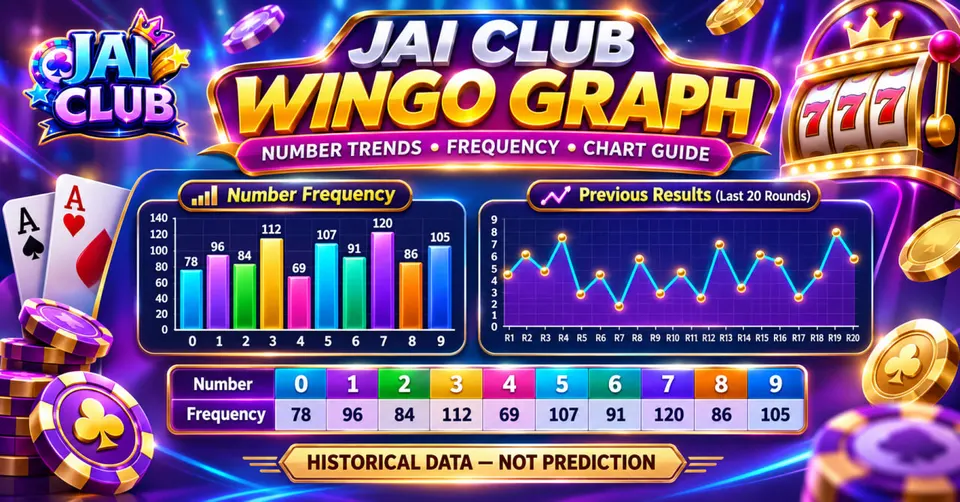
An analyst dashboard can calculate how often numbers appeared, identify previous streaks and arrange historical records into a readable chart. These functions can be useful for understanding data. They do not automatically establish that a tool can predict an independent game outcome.
This guide explains what WinGo analyst tools actually measure, how their accuracy claims should be tested and why attractive charts are not a substitute for evidence.
What Is a WinGo Analyst Tool?
A WinGo analyst tool is software or a dashboard intended to examine information associated with WinGo rounds.
Different tools may include digit frequency tables, colour counts, Big/Small summaries or lists of recent outcomes. Some also publish suggested future results.
The first group of features is descriptive. It tells readers what has happened in the recorded sample. The second group is predictive. It makes a claim about an outcome that has not happened yet.
These functions should be evaluated separately because a dashboard can be accurate when counting previous results while being unreliable at forecasting future ones.
There is no verified universal WinGo Analyst product that should automatically be treated as an official part of Jai Club Game.
WinGo Analyst Me Number Analysis Kaise Hota Hai?
Most simple numerical analysis begins with a list of completed results.
Consider the following fictional example of ten WinGo digits:
2, 7, 1, 7, 0, 4, 7, 9, 3, 5
An analyst can count how often each number appears. In this sample, the number 7 appears three times. The other recorded digits appear once, while 6 and 8 do not appear.
This is straightforward arithmetic. A spreadsheet could produce the same result without any special prediction algorithm.
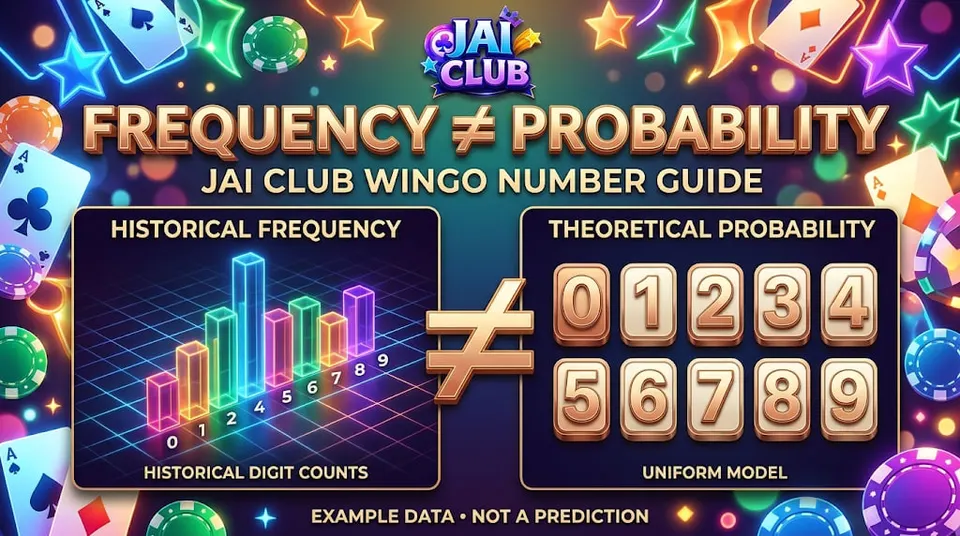
The observed frequency of number 7 is 3 divided by 10, or 30%. That figure describes the ten previous entries. It is not proof that number 7 has a 30% probability in the next round.
What a WinGo Analyst Dashboard Can Show
A dashboard may combine several statistics:
| Dashboard feature | What it measures | What it does not establish |
|---|---|---|
| Number frequency | Count of past digits | Next winning number |
| Colour history | Previous colour labels | Future colour |
| Big/Small count | Historical group totals | Guaranteed reversal |
| Missing count | Rounds since last occurrence | A number is due |
| Trend line | Movement across past values | Future direction |
| Prediction score | Claimed forecast performance | Accuracy without a full test |
Every number depends on the completeness and accuracy of the source data.
If earlier records are missing or mixed between different WinGo modes, the resulting dashboard can be misleading even before any prediction is attempted.
How Does WinGo Analyst Accuracy Work?
Prediction accuracy should measure how often a recorded forecast matches the outcome it was intended to predict.
A basic exact-number accuracy formula is:
Accuracy = Correct predictions ÷ Total recorded predictions × 100
EXAMPLE:
Suppose a tool publishes 100 predictions before their respective rounds. Exactly 12 predictions match the completed results.
Its recorded exact-number accuracy would be 12%.
This calculation assumes every prediction is counted, including unsuccessful ones. Removing failed forecasts from the sample would produce a distorted result.
The evaluation should also specify whether the prediction concerns the exact digit, colour, or Big/Small category.
These are not equivalent tasks.
Exact Number vs Colour Prediction Accuracy
In a common WinGo model, there are ten possible digits from 0 through 9.
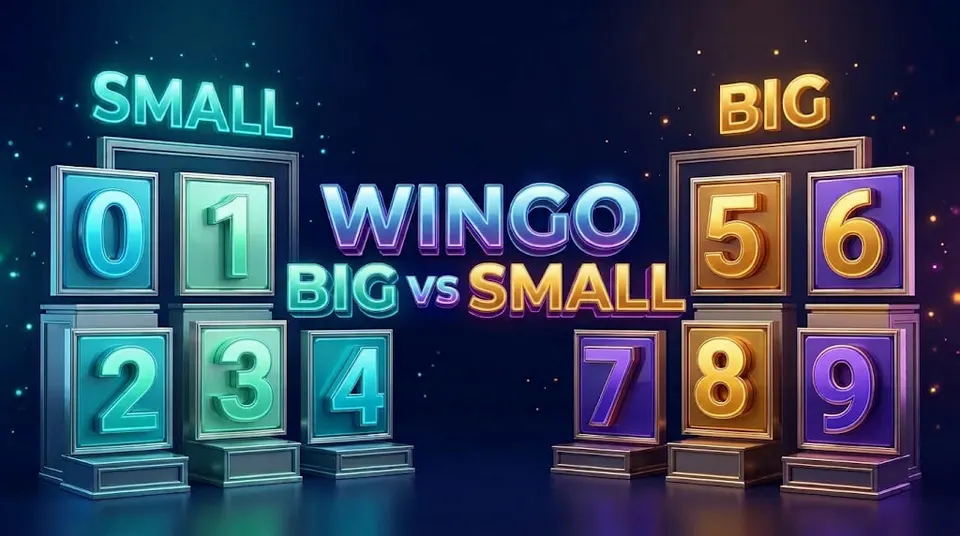
Colour categories may group several digits together. Big and Small also group multiple digits into categories under defined rules.
Therefore, predicting a category is mathematically different from identifying one exact digit.
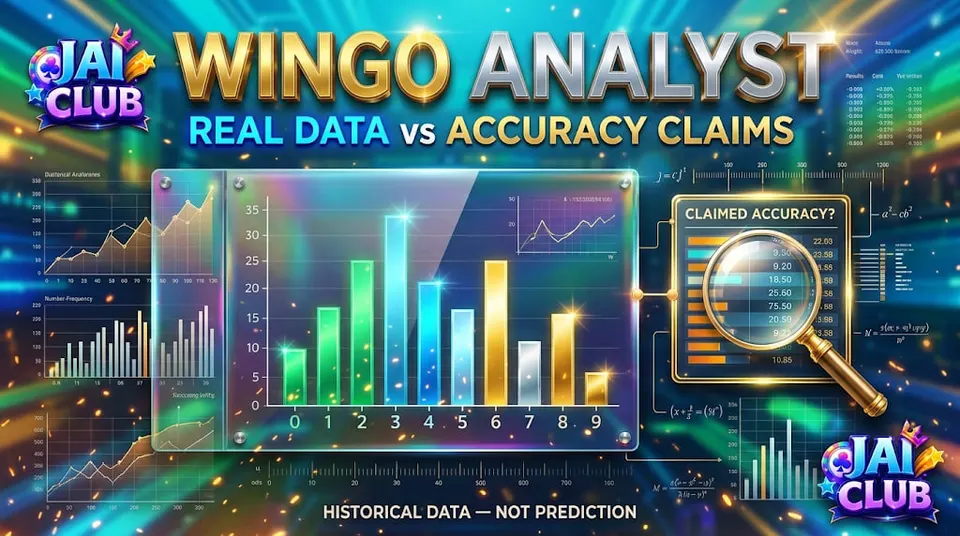
A dashboard claiming 70% accuracy might be counting colour or category predictions rather than exact-number predictions.
Without knowing the definition of success, the advertised percentage is incomplete.
A trustworthy performance report should state the target, number of predictions, method of recording and complete results.
WinGo Analyst Ka 90% Accuracy Claim Sahi Hai?
A 90% success claim requires verifiable evidence.
For example, screenshots showing nine correct predictions do not establish a 90% long-term accuracy rate if the publisher made hundreds of other forecasts that were not shown.
The sample must include all predictions made during the stated testing period.
Ideally, forecasts should be recorded before the outcome becomes known, with timestamps and an unedited archive.
Another important question is whether the tool was evaluated using information that was already available at prediction time.
If a model uses future results accidentally during testing, its reported accuracy cannot be treated as genuine forecasting performance.
What Is the Difference Between Analysis and Prediction?
Analysis describes existing information. Prediction attempts to identify an outcome that is still unknown.
For example, saying "number 7 appeared three times in ten completed rounds" is an analytical statement.
Saying "number 7 will appear in the next round" is a prediction.
The first statement can be verified from historical records. The second needs a reliable forecasting method and independent testing.
Confusing these two activities is one of the most common problems in WinGo Analyst advertising.
A colourful dashboard may perform accurate calculations without possessing any useful forecasting ability.
Does More Historical Data Improve WinGo Predictions?
A larger historical sample can improve the reliability of descriptive estimates under appropriate statistical assumptions.
For example, a frequency calculation based on one thousand complete results is generally less sensitive to a single observation than a calculation based on ten results.
However, more data does not automatically make an independent random outcome predictable.
If every future digit is independently generated with the same probability, knowing thousands of earlier results does not identify the next digit.
Whether any predictive signal exists depends on the actual outcome-generation mechanism, not the number of rows in a spreadsheet.
How to Check a WinGo Analyst App
Start by examining what the application claims to provide.
If it offers historical statistics, check whether those statistics match the underlying completed records.
If it offers forecasts, determine whether they are published before the relevant rounds and preserved after the outcomes become available.
A useful review should examine the developer identity, data source, testing method and privacy permissions.
An APK claiming access to a secret algorithm should not be considered authentic because it uses a familiar Jai Club logo.
The presence of a prediction button is not proof that its output is reliable.
What About AI-Based WinGo Analysts?
Artificial intelligence can identify patterns within historical data. However, a model also needs a genuine relationship between its inputs and future outcomes to produce useful forecasts.
If a game is designed to generate independent unpredictable results, an AI model cannot create reliable future information merely by studying previous digits.
AI tools can still organise records, detect inconsistencies and generate charts.
Those are valid analytical uses, but they should not be marketed as proven future-result prediction without evidence.
Data Quality Matters More Than Dashboard Design
A WinGo Analyst can produce incorrect conclusions if its source records are incomplete.
For example, mixing one-minute and five-minute results may combine separate sequences.
Duplicate period identifiers can inflate frequency totals, while missing periods can distort gap calculations.
A useful data audit checks whether every result belongs to the correct mode, whether all included rounds are completed and whether duplicates have been removed.
Even a sophisticated model cannot fix every error caused by unreliable input information.
For the meaning of recorded periods, read What Do WinGo Game Records Actually Show?.
Can WinGo Analyst Tools Predict Big or Small?
A tool may publish Big/Small forecasts, but its accuracy must be tested using the same principles as exact-digit predictions.
Under a hypothetical uniform 0–9 model with five Small and five Big digits, either category has a theoretical probability of 50%.
A claimed predictor should demonstrate performance beyond the relevant baseline through a sufficiently large, properly recorded evaluation.
A short sequence of successful category forecasts does not establish a repeatable advantage.
The actual provider's classification rules must also be verified.
Common Warning Signs
Be cautious when a WinGo Analyst displays a very high success percentage without revealing the complete prediction history.
Other warning signs include edited screenshots, missing timestamps, changing predictions after publication and promises of guaranteed results.
A legitimate statistical report should allow readers to understand how each percentage was calculated.
It should also acknowledge uncertainty and explain the limits of the available data.
A tool that cannot demonstrate its claimed accuracy should not be treated as reliable merely because its interface looks professional.
Frequently Asked Questions
What is a Jai Club WinGo Analyst?
It is a term associated with tools that analyse WinGo historical results or claim to predict future digits.
WinGo Analyst Me Frequency Kya Hai?
Frequency is the number of times a particular result appears within a defined historical sample.
Is WinGo Analyst the same as WinGo prediction AI?
Not necessarily. Analytical software and predictive AI describe different functions, although some products claim to provide both.
Can a WinGo Analyst guarantee the next number?
No verified guarantee has been established for such tools.
Is 90% WinGo prediction accuracy believable?
It requires complete, independently checkable prediction records and a clearly defined success measure.
Does a professional dashboard prove the tool is official?
No. Interface appearance does not establish the publisher's identity or affiliation.
Can past results reveal future numbers?
In an independent random game, previous outcomes do not determine the next result.
Conclusion
A WinGo Analyst can organise historical results, calculate frequency and display statistical summaries. Those features may help readers understand previous rounds.
However, analysing completed results is not the same as predicting future outcomes. Accuracy claims require complete records, clear definitions and reliable testing.
Readers researching Jai Club WinGo should focus on verifiable information rather than screenshots or advertised success percentages.
Editorial disclosure: All calculations use fictional examples. This article does not claim direct testing of a WinGo Analyst application or access to private Jai Club result systems.
Disclaimer: JaiClubGame.online is an independent educational website and is not officially affiliated with Jai Club. This guide does not provide guaranteed predictions or financial advice.