WinGo Big Small Explained: Number Groups on Jai Club
Understand the Big and Small number groups in Jai Club WinGo, how they relate to colour classifications, and what completed result records mean.
In this article
- What Does Big Small Mean in WinGo?
- Common WinGo Big Small Number Chart
- How Big Small Relates to Red, Green and Violet
- Are Big and Small Equally Likely?
- Understanding Big Small Result History
- Does WinGo Duration Affect Big Small?
- Why Big Small Streaks Are Often Misunderstood
- Common WinGo Big Small Questions
- Is 0 Big or Small?
- Is 5 Big or Small?
- Can a Red result also be Big?
- Are colour and Big Small the same?
- Does a long Small streak guarantee Big next?
- Is the Big Small chart identical across every Jai Club service?
- Conclusion
Jai Club WinGo Big Small refers to a numerical classification used in certain WinGo-style game formats. Each completed period may display a result digit together with a label indicating whether that digit belongs to the Big or Small group. Colour labels such as Red, Green and Violet may also appear in the same record, making it useful to distinguish how each classification is determined.
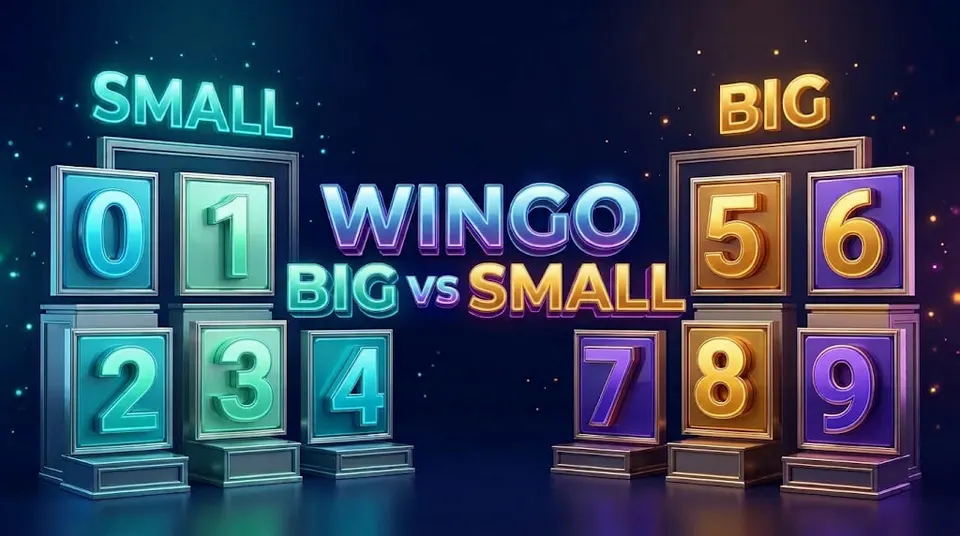
A commonly discussed WinGo format places digits 0 through 4 in the Small group and digits 5 through 9 in the Big group. Although the mapping itself is straightforward, it should not be confused with the probability of receiving a particular result or the settlement conditions attached to a game selection.
This guide explains the Big and Small number chart, its relationship with colour labels, how to interpret result-history records and why previous outcomes do not reliably establish the next result.
What Does Big Small Mean in WinGo?
Big and Small are labels used to group numerical outcomes according to predefined rules. In a number-based system, the game records a digit and then assigns the corresponding size classification. The label is therefore often a property of the original result rather than a separate random event.
For example, if a completed period produces number 3, it would be Small under the common 0–4 grouping. A result of 8 would be Big under the corresponding 5–9 grouping. The digit itself remains the underlying numerical outcome, while the classification provides an additional way of describing it.
Readers exploring this relationship can review our Jai Club Colour vs Number Results article, which explains how one digit may produce several result labels.
Common WinGo Big Small Number Chart
The following chart represents a widely discussed WinGo-style number classification. It is a general explanatory model and should not be assumed to represent the verified rules of every Jai Club service.
| Result number | Classification |
|---|---|
| 0 | Small |
| 1 | Small |
| 2 | Small |
| 3 | Small |
| 4 | Small |
| 5 | Big |
| 6 | Big |
| 7 | Big |
| 8 | Big |
| 9 | Big |
Under this convention, the distinction is fixed rather than relative to the previous outcome. Number 4 remains Small even if the previous result was 0, and number 5 remains Big even if the previous result was 9. The classification is defined by the game's number range, not whether a result has increased or decreased.
This distinction helps prevent a frequent misunderstanding in which users assume a result becomes Big merely because it is larger than the number shown in the preceding round.
How Big Small Relates to Red, Green and Violet
Colour and size classifications describe different properties of the same digit. In one common mapping, the digits 2, 4, 6 and 8 are associated with Red, while 1, 3, 7 and 9 are associated with Green. Digits 0 and 5 may receive special Violet-related treatment, depending on the platform.
Under that example, number 2 is Red and Small, while number 8 is Red and Big. Likewise, number 1 is Green and Small, while number 7 is Green and Big. The same colour can therefore appear in both size groups, showing that colour and size are not interchangeable classifications.
Special numbers are particularly important. Number 0 remains Small under the conventional size mapping, even when it is associated with Violet. Number 5 remains Big, regardless of how a particular interface presents its special colour designation.
Are Big and Small Equally Likely?
In a simplified mathematical model where each digit from 0 through 9 has an equal and independent chance of appearing, there are five digits in each size group. The theoretical probability of a Big result would therefore be 50%, and the probability of a Small result would also be 50%.
This is a mathematical illustration based on equal probabilities. It is not proof that any specific Jai Club WinGo implementation generates digits uniformly or uses a particular RTP. The actual probability system and payout rules require reliable provider information.
Even in a hypothetical balanced model, an equal long-term probability does not mean results must alternate between Big and Small. Sequences containing several outcomes from the same group can occur naturally.
Understanding Big Small Result History
WinGo history records may contain the completed period identifier, result digit, colour label and Big/Small classification. These fields should be read together because they often describe one completed result.
Consider this fictional example:
| Period | Result | Size |
|---|---|---|
| DEMO-801 | 3 | Small |
| DEMO-802 | 8 | Big |
| DEMO-803 | 7 | Big |
| DEMO-804 | 0 | Small |
| DEMO-805 | 6 | Big |
These rows illustrate how completed results may be organised. They do not reproduce live Jai Club data or demonstrate a future pattern.
The period identifier is useful when comparing screenshots or checking whether an entry has been updated. An active period and a completed result should never be treated as though they describe the same round without matching their identifiers.
For a deeper explanation, read What Do WinGo Game Records Actually Show?.
Does WinGo Duration Affect Big Small?
WinGo-style formats may use different nominal round durations, including thirty-second, one-minute, three-minute and five-minute modes. A shorter duration increases how frequently periods can occur, but timing alone does not establish a different Big/Small classification or probability distribution.
If two modes use identical digit classifications, they may display the same number groups while operating on separate schedules. Their result histories should still be treated as distinct sequences unless the provider specifically documents otherwise.
Our WinGo round-duration comparison explains how the timing formats differ.
Why Big Small Streaks Are Often Misunderstood
A sequence containing several Big outcomes can seem to suggest that Small should appear next. This belief is sometimes called the gambler's fallacy: the mistaken assumption that independent random outcomes must quickly compensate for previous results.
If each round is generated independently, the preceding sequence does not create an obligation for the next digit to belong to a different group. Historical frequencies may describe past behaviour, but they do not establish a guaranteed reversal.
It is also important to avoid confusing the frequency of result labels with payout expectations. A category appearing frequently does not by itself establish a favourable financial return.
Common WinGo Big Small Questions
Is 0 Big or Small?
Under the common 0–4 grouping, number 0 is Small.
Is 5 Big or Small?
Under the common 5–9 grouping, number 5 is Big.
Can a Red result also be Big?
Yes. In the illustrative mapping, numbers 6 and 8 are associated with Red and Big.
Are colour and Big Small the same?
No. They describe different classifications of the numerical result.
Does a long Small streak guarantee Big next?
No. Previous independent results do not reliably determine the next outcome.
Is the Big Small chart identical across every Jai Club service?
Not necessarily. Readers should confirm the rules of the specific version being examined.
Conclusion
WinGo Big and Small labels provide a simple way to classify numerical results. Under the commonly discussed format, numbers 0 through 4 are Small and numbers 5 through 9 are Big, while colour labels offer another description of the same outcome.
Understanding these fixed numerical groups helps readers interpret result-history tables and avoid confusing colours, period identifiers and size classifications. However, the chart should not be treated as a prediction method or proof of the actual probability system used by a specific provider.
Disclaimer: JaiClubGame.online is an independent informational website and is not officially affiliated with Jai Club. The mapping is presented as a general example and may not describe every implementation. Real-money gaming involves financial risk and may be restricted or prohibited by applicable laws.