TRX WinGo on Jai Club: Blockchain Hash, Result Numbers & Verification Guide
Learn how TRX WinGo is described in online game guides, what TRON block IDs contain, how blockchain-based result verification should work and which fairness claims require independent evidence.
In this article
- TRX WinGo Kya Hai?
- What Is the TRON Blockchain?
- TRX WinGo Me Blockchain Hash Kaise Work Karta Hai?
- Block Number vs Block ID vs Transaction Hash
- How TRON Block IDs Are Structured
- Example: How a Hash-to-Number Rule Could Work
- TRX WinGo Result Verification: What Is Required?
- TRX WinGo Me Result Kaise Verify Kare?
- Why Block Selection Matters
- Does Blockchain Verification Prove Fair Payouts?
- Does TRX WinGo Need a Cryptocurrency Wallet?
- Is TRX WinGo More Predictable Than Normal WinGo?
- Can the Same TRON Block Be Used in Several Games?
- TRX WinGo vs Regular WinGo
- What Does the Official TRON Documentation Confirm?
- Sources and Verification Notes
- Frequently Asked Questions
- What is Jai Club TRX WinGo?
- TRX WinGo Me Block Hash Kaise Check Kare?
- Is a block ID the same as a transaction hash?
- Does TRX WinGo use the last digit of a hash?
- Can blockchain results be independently checked?
- Does blockchain verification guarantee profit?
- Can future TRX WinGo results be predicted?
- Conclusion
Jai Club TRX WinGo is a search topic associated with a variation of WinGo that claims to connect numerical game results with public TRON blockchain data. Instead of relying only on a result displayed by the gaming platform, a blockchain-based format may claim that an outcome can be checked against an independently visible block or transaction identifier.
This idea sounds simple, but genuine result verification involves more than locating a blockchain hash. The game must explain exactly which blockchain record is used, when that record is selected and how its contents are converted into a number.
TRX WinGo appears in third-party gaming guides, but the exact formula and current configuration of a Jai Club TRX WinGo service have not been independently verified. This article explains how TRON block records work and what evidence is needed to confirm a blockchain-based game result.
TRX WinGo Kya Hai?
TRX WinGo is a term used for a WinGo-style numerical game that claims to use information from the TRON blockchain.
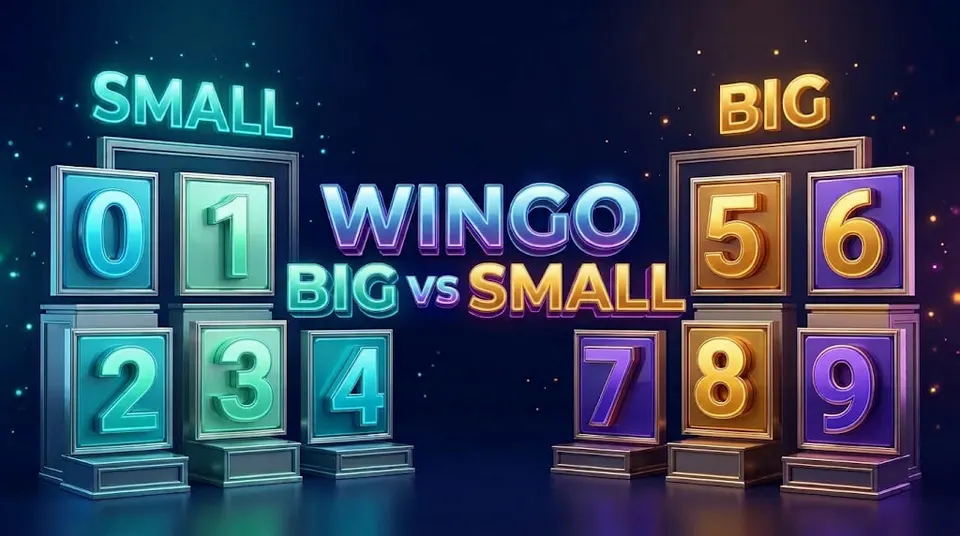
In a common WinGo format, the primary result is one digit from 0 through 9. That digit may then be classified by colour, Big/Small or Odd/Even according to the game's rules.
The TRX variation is generally described as changing the source used to obtain the result.
However, there is no universal TRX WinGo technical standard established simply by the game's name.
Different services may claim to use block IDs, transaction hashes or different conversion formulas.
Therefore, the exact method must be verified separately for each provider.
What Is the TRON Blockchain?
TRON is a public blockchain network that records blocks and transactions.
A block contains transaction data and metadata linking it with earlier blocks. This makes the recorded blockchain history independently inspectable.
TRON's developer documentation explains the block structure, including fields such as the block number, parent hash, timestamp and block ID.
The blockchain records are public, so a user can check whether a particular block exists.
However, the existence of a public block does not automatically prove that an unrelated game used that block fairly.
A separate connection between the game period and blockchain record must also be established.
TRX WinGo Me Blockchain Hash Kaise Work Karta Hai?
Some third-party TRX WinGo guides describe a process in which a game associates a completed round with a TRON block and derives a numerical result from the block's identifier.
For example, a provider might define a rule to examine a particular section of a hexadecimal identifier and convert selected characters into a digit.
However, the conversion rule is not universal.
One website may describe reading from the right until a decimal digit appears, while another may refer to a transaction hash or a different character position.
These descriptions should not be combined into one supposedly official Jai Club formula.
The exact algorithm must be published by the particular game provider.
Block Number vs Block ID vs Transaction Hash
These terms describe different technical objects.
| Term | Meaning |
|---|---|
| Block number | Position of a block within the blockchain |
| Block ID | Identifier associated with the complete block |
| Transaction hash | Identifier of an individual transaction |
| Timestamp | Recorded time associated with the block |
| Game period ID | Identifier used by the gaming platform |
| Result digit | Numerical outcome displayed by the game |
A block can contain multiple transactions. Therefore, a block ID should not be described as the same thing as a transaction hash.
TRON also uses a specific composite block-ID structure, as explained in its developer documentation.
These details matter because two different identifiers can produce different derived digits under the same conversion rule.
How TRON Block IDs Are Structured
TRON's official documentation describes a 32-byte block ID containing a block-number prefix and data derived from the block header.
This means a block ID is not simply a random string written by the gaming website.
The block number and associated block data can be checked against public network records.
However, public availability does not answer which block the game was supposed to use.
If a platform can choose a favourable block after seeing several possible outcomes, the existence of the chosen block alone would not demonstrate a fair selection process.
That is why the block-selection rule must be fixed and verifiable.
Example: How a Hash-to-Number Rule Could Work
Consider a fictional system that publishes the following rule before a round:
"Use the final decimal digit appearing in the selected block ID when reading from right to left."
Suppose the illustrative block identifier ends with:
...A4D8F
Reading from the right, the characters are F, 8, D, 4 and A.
The first decimal digit encountered is 8, so the example formula produces result 8.
This is only a fictional demonstration of one possible conversion method.
It does not establish that Jai Club or any specific TRX WinGo service uses this rule.
TRX WinGo Result Verification: What Is Required?
A reliable verification process needs several pieces of information.
First, the game must provide a completed period identifier.
Second, it must explain which TRON block or transaction corresponds to that period.
Third, it must publish the exact formula used to convert the blockchain information into a result.
Fourth, the published blockchain record must be independently retrievable.
Finally, applying the documented formula should reproduce the displayed result.
If any essential part is missing, the result may be difficult or impossible to verify independently.
TRX WinGo Me Result Kaise Verify Kare?
A complete verification would follow this general sequence:
- Identify the completed game period.
- Find the block number or transaction identifier specified by the game.
- Check that record through an independent TRON explorer.
- Confirm that the record corresponds to the period under the published selection rule.
- Apply the provider's exact conversion formula.
- Compare the calculated digit with the published result.
This sequence is an audit framework, not a verified procedure for a specific Jai Club platform.
Without the provider's formula and mapping rule, readers should not claim to have confirmed a result.
Why Block Selection Matters
Imagine a game that promises to use the first block produced after a particular closing time.
If that condition is publicly fixed before the round, the selected block can potentially be checked against the blockchain's timestamps and block sequence.
However, if the website later chooses from several blocks without explaining why, the selection process may not be independently auditable.
A valid blockchain record only proves that the record exists.
It does not prove that the platform selected it according to a fair and predetermined rule.
This is one of the most important differences between blockchain transparency and a complete game-fairness verification.
Does Blockchain Verification Prove Fair Payouts?
No.
Even if a result is correctly derived from blockchain data, the game's payout rules may still contain a house margin.
The blockchain result source and the payout structure are separate parts of the product.
For example, a method might produce a reproducible digit while the platform applies its own settlement conditions to different result categories.
A reproducible result does not guarantee favourable financial returns.
Fairness claims must therefore be evaluated across the complete mechanism, not only the numerical output.
Does TRX WinGo Need a Cryptocurrency Wallet?
Not necessarily.
Reading public blockchain data does not require a personal cryptocurrency wallet.
A block explorer allows anyone to inspect public records using a browser.
However, the account, payment and eligibility requirements of any particular game service are separate matters and should not be inferred from the word TRX.
A game using public blockchain information does not automatically require cryptocurrency transactions from every user.
Is TRX WinGo More Predictable Than Normal WinGo?
A verifiable source is not the same as a predictable future result.
Blockchain records that have not yet been produced cannot generally be inspected as completed historical records.
If a game genuinely uses a future block selected according to a fixed rule, its outcome may be reproducible afterwards without being knowable beforehand.
However, the actual predictability depends on the full design and whether the provider can influence source selection.
Claims about guaranteed TRX WinGo predictions should not be accepted merely because the game mentions blockchain technology.
Can the Same TRON Block Be Used in Several Games?
A public blockchain record can be read by multiple services.
However, using the same public record does not necessarily produce the same game result.
Different services may choose different conversion formulas, number classifications or round mappings.
For example, one system could use a selected decimal digit while another applies a numerical operation to a larger portion of the identifier.
Both might reference the same block but produce different outputs.
Therefore, public blockchain data should always be interpreted together with the game's published algorithm.
TRX WinGo vs Regular WinGo
| Feature | Regular WinGo-style game | Claimed TRX WinGo format |
|---|---|---|
| Main result | Commonly digit 0–9 | Commonly digit 0–9 |
| Source | Provider-defined | May claim TRON-derived data |
| Period mapping | Provider-specific | Must link period to block |
| Independent source check | Depends on provider | Possible if full rules are public |
| Payouts | Provider-defined | Provider-defined |
| Guaranteed prediction | No | No |
This table describes the claimed structural difference. It does not verify an actual Jai Club TRX WinGo implementation.
For background on WinGo results, browse the Jai Club WinGo category.
What Does the Official TRON Documentation Confirm?
TRON's documentation confirms the structure of blocks, block identifiers, timestamps and relevant API methods.
It does not confirm that a specific Jai Club TRX WinGo title uses any particular record or mathematical conversion rule.
That difference is important for source reliability.
A trustworthy article can cite official TRON documentation for blockchain technology while being clear that the gaming integration itself remains unverified.
Sources and Verification Notes
Primary technical reference:
TRON Developer Documentation — Blocks https://developers.tron.network/docs/block
This source explains block IDs, block numbers, timestamps and public retrieval methods.
Third-party TRX WinGo descriptions were used only to understand how game providers market blockchain-based result systems. They were not treated as official proof of the Jai Club implementation.
Frequently Asked Questions
What is Jai Club TRX WinGo?
It is a search term for a WinGo-style game claimed to use TRON blockchain data to derive results.
TRX WinGo Me Block Hash Kaise Check Kare?
Use an independent TRON explorer to locate the specified block, then apply the game's verified conversion rule.
Is a block ID the same as a transaction hash?
No. They identify different blockchain objects.
Does TRX WinGo use the last digit of a hash?
Some third-party guides describe such rules, but no universal Jai Club formula has been verified.
Can blockchain results be independently checked?
Public records can be inspected, but complete game verification also requires a fixed period mapping and conversion algorithm.
Does blockchain verification guarantee profit?
No. Result verification and financial return are separate matters.
Can future TRX WinGo results be predicted?
No reliable prediction follows from blockchain branding alone.
Conclusion
TRX WinGo is interesting because it introduces the possibility of linking numerical game results with publicly inspectable blockchain records.
However, a public block ID is only one part of a genuine verification process. The game must also identify the correct block, publish its conversion formula and apply those rules consistently.
Readers should distinguish verified TRON technology from unverified claims about particular gaming platforms. Blockchain transparency is useful only when the connection between the public data and the game result can actually be checked.
Editorial note: This article is based on technical TRON documentation and clearly identified third-party game descriptions. No official Jai Club TRX WinGo integration or individual round was independently tested.
Disclaimer: JaiClubGame.online is an independent educational website. Blockchain references are informational and do not constitute cryptocurrency or gambling advice.