How to Read Jai Club Colour Trading Result History
Learn how to read Jai Club Colour Trading result history, identify completed periods, understand number and colour labels, and recognise delayed records.
In this article
- What Does Jai Club Colour Trading Result History Show?
- Understanding Period Numbers, Digits and Colour Labels
- Why Can One Number Have More Than One Colour?
- How Big and Small Appear in History
- Why Is the Latest Colour Trading Result Missing?
- Colour Trading History vs WinGo Records
- Does a Colour History Pattern Predict the Next Round?
- Frequently Asked Questions
- What is Jai Club Colour Trading result history?
- What is the difference between a period number and a result number?
- Why does a history entry show Violet with another colour?
- Why is the most recent result not appearing?
- Can previous Colour Trading history reveal the next result?
- Are WinGo and Colour Trading histories interchangeable?
- Conclusion
Jai Club Colour Trading result history displays records of completed game periods, usually combining numerical outcomes with colour classifications such as Red, Green and Violet. Some interfaces also include Big and Small labels, period identifiers and additional details about each completed round. Although the information may look simple, understanding how these fields relate to one another is important for interpreting the recorded results correctly.
A history entry should never be treated as an isolated colour or number without its corresponding period. The digit recorded for a round may determine several labels, while the period identifier establishes which round those labels describe. Confusion often arises when the active countdown changes before the previous result appears in the history section, especially in short-duration games.
This guide explains how Colour Trading result history is typically organised, what its individual fields mean and how to distinguish a display delay from an incorrectly interpreted record. The examples are fictional and describe commonly discussed game formats rather than verified live Jai Club outcomes.
What Does Jai Club Colour Trading Result History Show?
A Colour Trading history table is a chronological record of previously completed game periods. Depending on the provider, each row may contain a period number, a digit between 0 and 9, one or more colour labels and a Big or Small classification. The main purpose of the table is to show what was recorded for earlier rounds, not to announce what will happen in the next one.
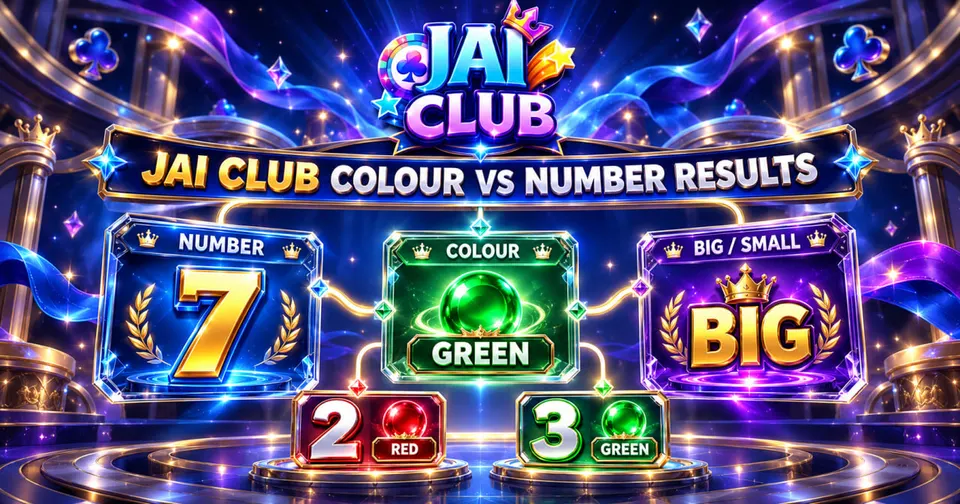
The numerical result is often the central piece of information. In a commonly discussed WinGo-style format, a digit such as 7 may also be classified as Green and Big, while 2 may be classified as Red and Small. These are different descriptions of the same numerical outcome rather than three independently generated results.
For additional background on this relationship, read our Jai Club Colour vs Number Results guide. It explains how colour and size classifications may be derived from one result digit.
Understanding Period Numbers, Digits and Colour Labels
The period identifier is the reference number used to distinguish one round from another. It may contain a date, sequential counter or another provider-specific pattern. The result digit, by contrast, represents the numerical outcome assigned to that completed round. A colour label describes how the digit is classified under the applicable game rules.
Consider this fictional history:
| Period | Number | Colour | Size |
|---|---|---|---|
| DEMO-701 | 2 | Red | Small |
| DEMO-702 | 7 | Green | Big |
| DEMO-703 | 0 | Red + Violet | Small |
| DEMO-704 | 8 | Red | Big |
| DEMO-705 | 5 | Green + Violet | Big |
This example follows a commonly discussed colour mapping and does not represent an official Jai Club history. Special digits such as 0 and 5 may be presented differently by individual providers.
The useful reading habit is to evaluate a complete row before comparing it with another. If a screenshot shows period DEMO-703 and another shows DEMO-704, the two screens are describing different rounds even when their layouts appear identical.
Why Can One Number Have More Than One Colour?
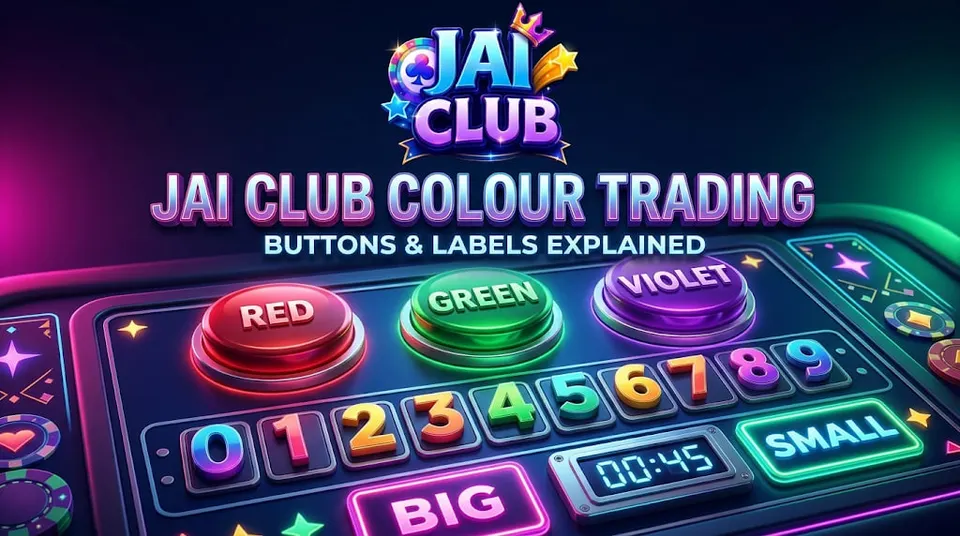
Some number-based colour games give special treatment to particular digits. Under one widely discussed mapping, 2, 4, 6 and 8 correspond to Red, while 1, 3, 7 and 9 correspond to Green. The digits 0 and 5 may involve Violet alongside another colour classification.
This means a history entry containing number 0 might show both Red and Violet, while number 5 might show Green and Violet. Such displays do not necessarily represent multiple independent draws. They may instead show several labels derived from a single completed digit.
The correct mapping depends on the specific game version. A simplified chart from an unrelated website should not be treated as authoritative for every service that uses Jai Club or WinGo terminology.
How Big and Small Appear in History
Big and Small commonly describe fixed numerical groups. In one frequently used convention, digits 0 through 4 are Small and digits 5 through 9 are Big. As a result, a Red result can belong to either group, and the same is true for Green.
For example, number 2 is Red and Small under the illustrative mapping, whereas number 8 is Red and Big. Their colour classifications match, but their numerical size groups differ. This illustrates why colour history and Big/Small history should be analysed as separate fields even when both originate from the same digit.
The labels are useful for describing completed rounds, but they do not prove that future results follow a predictable sequence.
Why Is the Latest Colour Trading Result Missing?
In timed gaming interfaces, the countdown, active period and result-history panel may update at different moments. A new period can become visible while the previous period's outcome has not yet appeared in history. This does not automatically mean that the earlier round was cancelled or that its result is incorrect.
Temporary connectivity problems, stale browser content and delayed data requests are other possible explanations. If the newest record appears to be missing, the relevant check is whether its period identifier has been recorded and whether the history panel subsequently updates.
When the entire game page fails to display correctly, our Jai Club Game Not Loading guide explains common browser and connectivity issues. A loading failure should be distinguished from a result that is genuinely pending.
Colour Trading History vs WinGo Records
Colour Trading and WinGo often use related numerical and colour terminology, but different interfaces may offer different round durations and result displays. A thirty-second mode can produce more periods during a fixed time interval than a five-minute mode, yet that does not establish different probabilities or a better outcome.
When comparing historical screenshots, confirm the game mode and period identifier first. A result recorded under one mode should not be assumed to correspond to a visually similar period from another.
For more detail, see What Do WinGo Game Records Actually Show?, which explains period identifiers and recorded numerical outcomes.
Does a Colour History Pattern Predict the Next Round?
Past results describe completed events and do not reliably determine future independent outcomes. A sequence of several Red results does not mean that Green must appear next, and an apparent pattern in a short sample is not proof of a dependable rule.
Frequency charts can be useful for describing historical observations, but their interpretation depends on the underlying mathematical model and the size of the sample. Neither a recent streak nor a long absence of one colour establishes certainty about the following period.
Readers should be cautious of third-party tools promising exact future colours based only on historical tables. A credible prediction claim would require evidence beyond the appearance of repeating labels.
Frequently Asked Questions
What is Jai Club Colour Trading result history?
It is a record of completed periods and their associated numerical and colour outcomes.
What is the difference between a period number and a result number?
The period number identifies a round. The result number is the numerical outcome recorded for it.
Why does a history entry show Violet with another colour?
Some colour mappings assign special classifications to digits such as 0 and 5. The exact presentation depends on the game's rules.
Why is the most recent result not appearing?
Possible explanations include a delayed history update, connectivity problems or stale browser content.
Can previous Colour Trading history reveal the next result?
Previous independent outcomes do not reliably identify the next number or colour.
Are WinGo and Colour Trading histories interchangeable?
Not necessarily. Different game modes and providers can use different period identifiers, layouts and rules.
Conclusion
Understanding Jai Club Colour Trading result history begins with recognising that period identifiers, result digits and colour labels serve different purposes. Reading the complete record makes it easier to interpret special colour classifications and identify whether a displayed entry belongs to the correct round.
Historical records provide useful information about completed outcomes, but they do not guarantee future results. Readers should rely on the actual game rules and verified records rather than unsupported prediction claims.
Disclaimer: JaiClubGame.online is an independent educational website and is not officially affiliated with Jai Club. All example records are fictional. Game rules and availability must be confirmed with the relevant provider. Real-money gaming involves financial risk and may be restricted or prohibited by applicable laws.