Jai Club Colour Trading: What Do the Buttons and Labels Mean?
Explore the Jai Club Game colour trading interface, including red, green, violet, numbers 0–9, Big and Small options, round timers, period IDs and result history.
In this article
- Jai Club Colour Trading: What Do the Buttons and Labels Mean?
- What Is Jai Club Game Colour Trading?
- Understanding the Jai Club Colour Trading Screen
- 1. What Do Red, Green and Violet Mean?
- Why Are 0 and 5 Special?
- 2. What Do the Number Buttons 0–9 Mean?
- Example Number and Colour Table
- 3. What Does Big and Small Mean in Jai Club Game?
- Are Big/Small and Red/Green the Same?
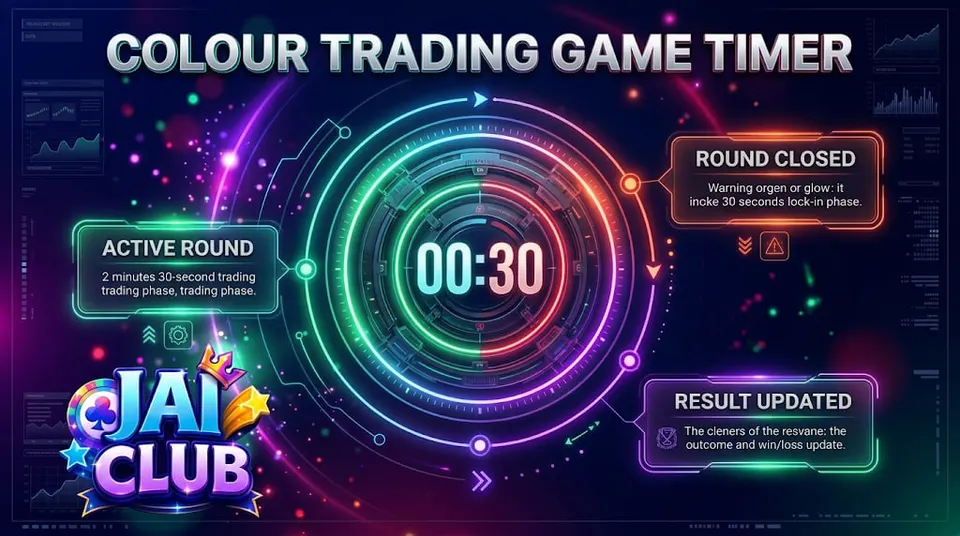
- 4. What Is the Jai Club Colour Trading Countdown?
- 5. What Is a Jai Club Period Number?
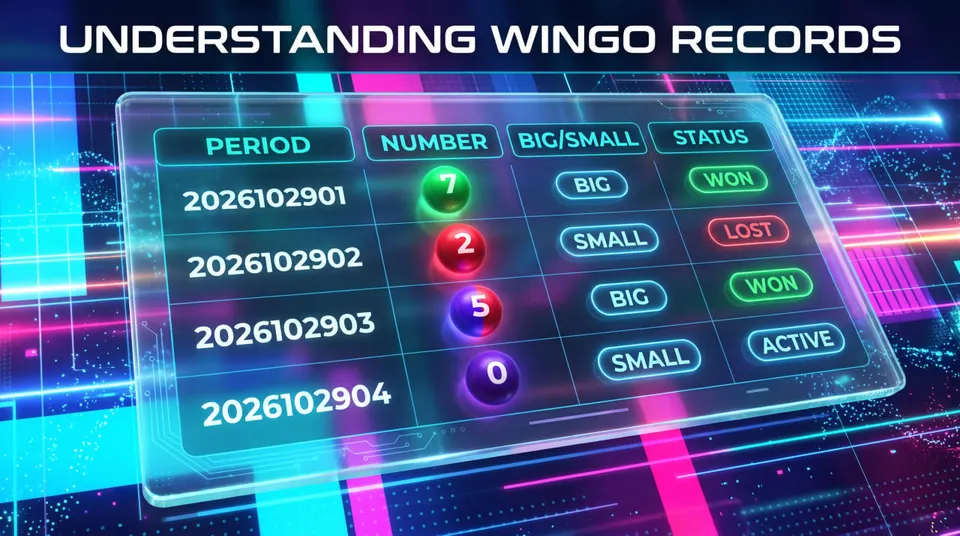
- 6. Understanding Jai Club Colour Trading Result History
- 7. What Do the Game Information and Rules Controls Show?
- 8. What Does a Pending Result Mean?
- 9. Common Mistakes When Reading the Jai Club Colour Trading Interface
- Confusing a Period Number With a Result
- Assuming Every Colour Chart Is Identical
- Ignoring the Selected Timer Mode
- Treating History as a Prediction Tool
- Trusting Unverified Screenshots
- 10. Where Can You Learn More About Jai Club Game Features?
- Frequently Asked Questions
- What is Jai Club Game colour trading?
- What do Red, Green and Violet mean in Jai Club?
- What does the number 0 mean in Jai Club colour trading?
- What does the number 5 mean?
- What is the difference between Big and Small in Jai Club?
- What does a Jai Club colour trading period number show?
- Can Jai Club colour trading history predict the next colour?
- Why is my Jai Club colour trading result still pending?
- Conclusion
Jai Club Colour Trading: What Do the Buttons and Labels Mean?
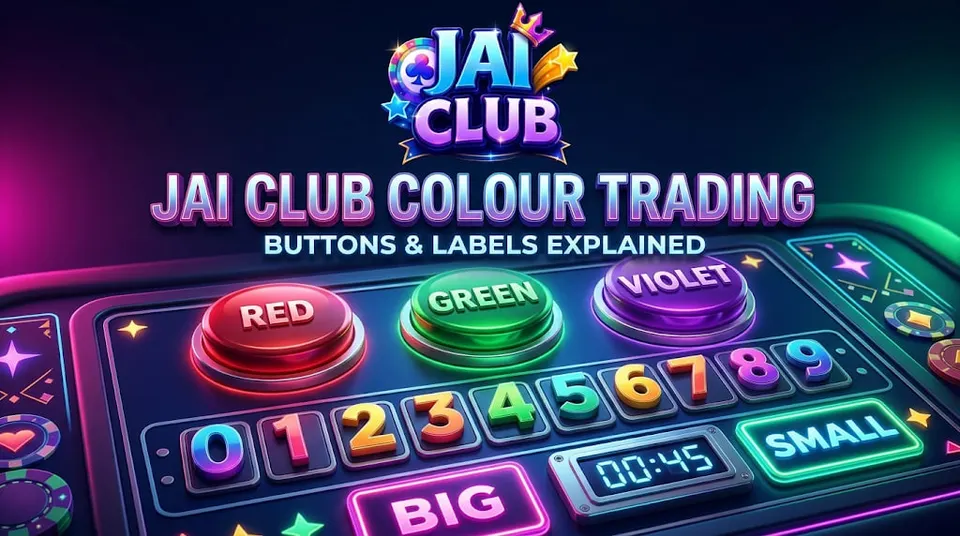
The Jai Club Game colour trading interface can display several options on a single screen, including Red, Green, Violet, numbers from 0 to 9, and Big or Small labels.
For someone seeing these controls for the first time, it may not be immediately clear what each section represents.
Are the coloured buttons different from the number buttons? What does Big or Small mean? And why does the game show a period number alongside a countdown timer?
This article explains the common elements found in Jai Club-style colour trading interfaces and how to interpret them without confusing completed results with future predictions.
What Is Jai Club Game Colour Trading?
Jai Club colour trading is a term commonly used for number-and-colour prediction games associated with Jai Club-related platforms.
These games usually organise activity into timed rounds. A round may display colour options, number choices, a countdown and a completed result.
Despite the term "trading", this format should not be confused with financial trading on a stock exchange.
The coloured options represent game outcomes rather than ownership of financial assets.
The interface may vary depending on the platform or game version. The descriptions below refer to commonly documented WinGo-style layouts, not a verified screenshot of every Jai Club application.
Understanding the Jai Club Colour Trading Screen
A typical colour trading interface can contain several separate areas.
| Screen Element | Common Purpose |
|---|---|
| Red, Green, Violet | Colour selection labels |
| Numbers 0–9 | Individual digit options |
| Big / Small | Result-size classifications |
| Countdown | Remaining time in a round |
| Period ID | Identifier for the current round |
| Result history | Previous recorded outcomes |
| Game rules | Explanation of selections and results |
These elements do not necessarily represent separate random outcomes.
In many WinGo-style formats, the number, colour and size classification are derived from the same completed result.
1. What Do Red, Green and Violet Mean?
Red, Green and Violet are commonly displayed as colour options in Jai Club Game colour prediction interfaces.
Their meaning depends on the number-to-colour mapping used by the particular game.
A commonly described WinGo-style format associates:
- Green with 1, 3, 7 and 9
- Red with 2, 4, 6 and 8
- Violet with special results involving 0 and 5
Some implementations associate 0 with both Red and Violet, and 5 with both Green and Violet.
Other interfaces may simplify how these special results appear.
For this reason, the colour mapping should always be confirmed using the game-specific rules.
Why Are 0 and 5 Special?
In some colour trading formats, the digits 0 and 5 do not behave like ordinary single-colour results.
A display may use a mixed-colour classification, special payout category or alternative presentation.
This does not mean the numbers can predict future results.
It simply describes how those completed outcomes are categorised.
2. What Do the Number Buttons 0–9 Mean?
Many Jai Club-style colour trading screens display ten number options.
These correspond to the digits from 0 through 9.
A number button and a colour button describe different selection categories.
For example, a number selection refers to one specific digit, while a colour label can represent a group of digits under the game's rules.
When a round finishes, the displayed result digit may determine both its colour classification and its size classification.
The result number is therefore an important part of interpreting the completed round.
Example Number and Colour Table
The following table illustrates a commonly described mixed-colour format.
| Number | Colour Classification | Size |
|---|---|---|
| 0 | Red + Violet | Small |
| 1 | Green | Small |
| 2 | Red | Small |
| 3 | Green | Small |
| 4 | Red | Small |
| 5 | Green + Violet | Big |
| 6 | Red | Big |
| 7 | Green | Big |
| 8 | Red | Big |
| 9 | Green | Big |
This is a reference example, not a universal rule for every Jai Club-branded platform.
3. What Does Big and Small Mean in Jai Club Game?
Big and Small are commonly used to divide result digits into two groups.
In a frequently documented 0–9 format:
Small: 0, 1, 2, 3 and 4.
Big: 5, 6, 7, 8 and 9.
For example, if a completed round displays the digit 8, that result belongs to the Big group in this format.
If the result is 2, it belongs to the Small group.
These labels describe the result digit. They do not indicate that the next number will follow a predictable pattern.
Are Big/Small and Red/Green the Same?
No.
Big and Small classify the numerical range, while Red and Green classify the colour according to the game's mapping.
A result can therefore be both Big and Green, or Small and Red.
The classifications are different descriptions of an outcome, rather than proof of two independent results.
4. What Is the Jai Club Colour Trading Countdown?
The countdown shows the remaining time associated with the active game period.
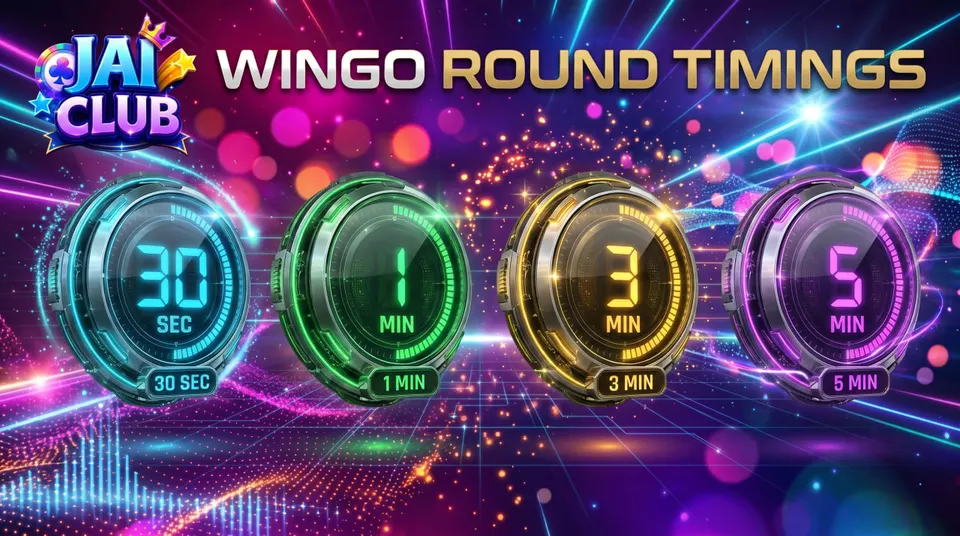
Many WinGo-style interfaces advertise round formats such as 30 seconds, 1 minute, 3 minutes and 5 minutes.
However, the available durations depend on the particular version.
The countdown helps identify when a period is expected to finish.
It does not determine which number or colour will appear next.
A timer reaching zero also does not necessarily mean the result will appear instantly on every device.
Network delay, application refresh behaviour and server processing can affect the visible update.
5. What Is a Jai Club Period Number?
A period number is an identifier assigned to a particular game round.
It helps distinguish one completed or ongoing round from another.
A long numeric period ID should not be mistaken for the result itself.
For example, imagine the following fictional record:
- Period ID: DEMO-1205
- Result number: 7
- Colour: Green
- Size: Big
- Status: Completed
The period ID identifies the round, while the result number records the outcome.
The example is fictional and does not represent live Jai Club data.
6. Understanding Jai Club Colour Trading Result History
Result history is a table or list showing previous completed rounds.
Depending on the interface, it may include period IDs, result numbers, colour labels, Big/Small classifications or timestamps.
A history table can help readers identify which outcome was displayed for a particular period.
However, it does not automatically indicate the next outcome.
For example, seeing Red appear several times consecutively does not establish that Green must appear next.
Such conclusions would require evidence about the actual outcome-generation process.
7. What Do the Game Information and Rules Controls Show?
Some interfaces provide a rules button, information icon or help section.
This area may explain:
- Supported colour classifications
- Available number selections
- Big and Small boundaries
- Round duration options
- When a round closes
- How completed results are displayed
- Applicable game-specific conditions
The terminology and available controls vary.
Users should not assume that screenshots from different Jai Club-branded websites represent identical versions.
8. What Does a Pending Result Mean?
A pending result normally indicates that a final outcome is not yet available in the displayed record.
The interface may be waiting for the round to finish, for the server to publish the result or for the page to refresh.
A pending status should not be treated as an outcome of zero.
Likewise, the previous completed result should not be interpreted as the result of a newly opened period.
The current period ID and completion status are essential for reading the information correctly.
9. Common Mistakes When Reading the Jai Club Colour Trading Interface
Confusing a Period Number With a Result
The period identifier describes which round is being displayed.
The result digit describes the completed outcome.
Assuming Every Colour Chart Is Identical
Different implementations may display 0, 5 and Violet-associated classifications differently.
Ignoring the Selected Timer Mode
A result from a one-minute mode should not automatically be compared with an unrelated three-minute period.
Treating History as a Prediction Tool
Previous results document past rounds. They do not guarantee future numbers.
Trusting Unverified Screenshots
A screenshot with no visible period ID, game mode or timestamp may not provide enough information to verify a result.
10. Where Can You Learn More About Jai Club Game Features?
JaiClubGame.online publishes independent explanations of game terminology, interface elements and game mechanics.
For related information, browse the Colour Trading category.
You can also explore the WinGo category for articles about countdown modes and game records.
These topics help explain how a game presents its information without suggesting that past results provide guaranteed future predictions.
Frequently Asked Questions
What is Jai Club Game colour trading?
It is a term commonly used for timed number-and-colour prediction formats associated with Jai Club-related platforms.
What do Red, Green and Violet mean in Jai Club?
They are colour classifications associated with game results. Their exact mapping depends on the specific game version.
What does the number 0 mean in Jai Club colour trading?
In a commonly described mixed-colour format, 0 is classified as Small and associated with Red and Violet. The actual rules should be checked for the relevant game.
What does the number 5 mean?
In the same common format, 5 is classified as Big and associated with Green and Violet.
What is the difference between Big and Small in Jai Club?
A common number format classifies 0–4 as Small and 5–9 as Big.
What does a Jai Club colour trading period number show?
It identifies a particular round. It is not the completed result digit and should not be used to predict the next outcome.
Can Jai Club colour trading history predict the next colour?
Past result history alone cannot reliably establish the next outcome in an independently generated game.
Why is my Jai Club colour trading result still pending?
Possible explanations include an ongoing round, delayed server processing or an interface update that has not yet completed.
Conclusion
The Jai Club Game colour trading interface brings together several different types of information, including colour buttons, number selections, Big/Small labels, countdowns and historical results.
Each element has a distinct purpose.
Understanding how these labels relate to a completed result makes the screen easier to interpret and reduces confusion between game records and predictions.
The most reliable reference for a particular platform remains its own verified rules.
Disclaimer: JaiClubGame.online is an independent educational website and is not officially affiliated with Jai Club. This article does not provide live results, financial advice or guaranteed predictions. Real-money gaming carries financial risks and may be restricted or prohibited by applicable laws.